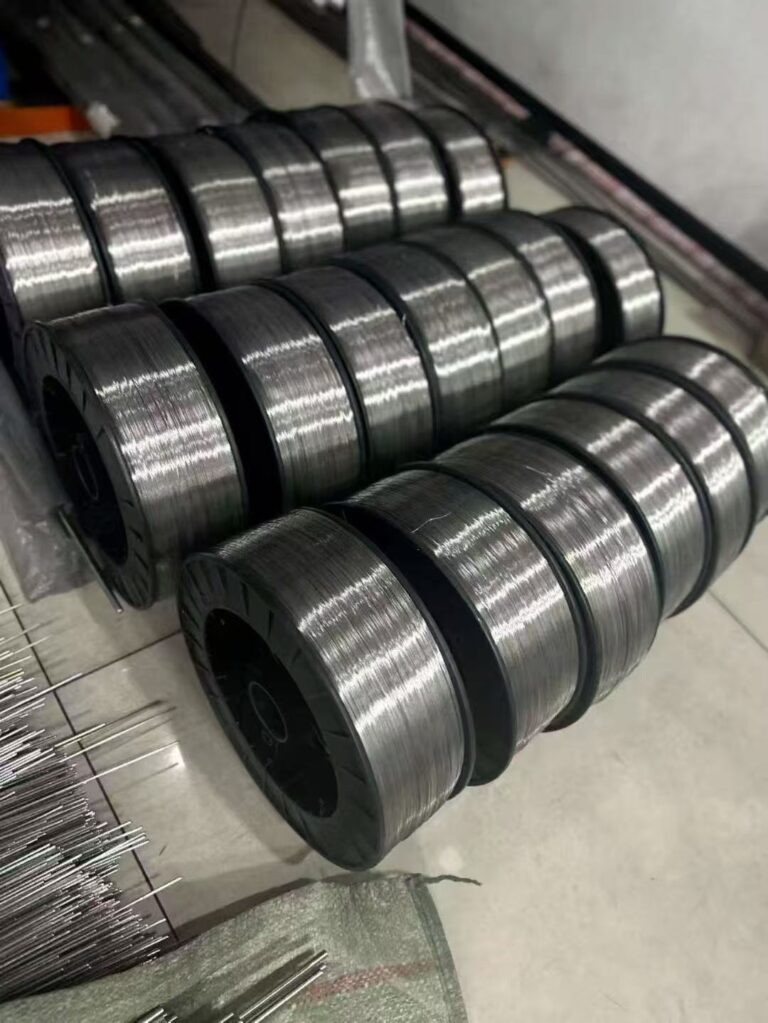
Product Overview
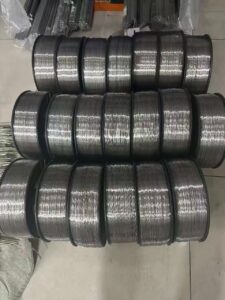
Grade 2 titanium wire is the most widely used commercially pure titanium wire, offering an excellent balance of corrosion resistance, moderate strength, and good formability. It is commonly used in chemical processing, marine environments, heat exchangers, industrial fabrication, and general-purpose titanium wire products where reliable performance and cost efficiency are required.
Chemical Composition
| Element | Content |
|---|---|
| Titanium | Balance |
| Iron | ≤ 0.30% |
| Oxygen | ≤ 0.25% |
| Carbon | ≤ 0.08% |
| Nitrogen | ≤ 0.03% |
| Hydrogen | ≤ 0.015% |
Typical Applications
- Chemical processing equipment and corrosion-resistant industrial components
- Marine hardware and seawater-exposed fasteners and ties
- Heat exchanger and condenser-related fabricated parts
- Titanium wire mesh, filtration, and woven products
- General-purpose formed-wire parts and fixtures
Common Sizes and Forms of Supply
- Diameter range: 0.10 mm to 6.00 mm
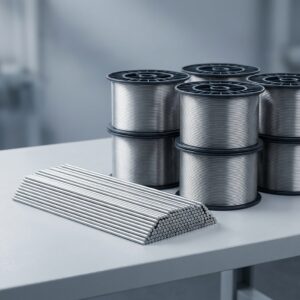
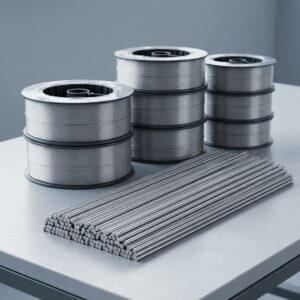
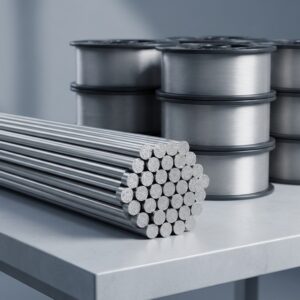
- Supply forms: spooled wire, coils, straightened and cut lengths
- Condition options: annealed for forming, cold-worked for higher strength (per requirement)
| Diameter Category | Diameter Range | Common Uses |
|---|---|---|
| Fine wire | 0.10–1.00 mm | mesh, weaving, filtration, precision forming |
| Medium wire | 1.00–6.00 mm | general fabrication, formed parts, ties, fixtures |
National Grade Designations
- USA: ASTM Grade 2, UNS R50400
- China: TA2
- Japan: JIS Class 2 (commercially pure titanium)
- Russia: VT1-0 equivalents used in some supply chains
Certifications and Standards
- ASTM B863 titanium wire available
- ISO 9001 quality management system available
- EN 10204 3.1 inspection certificate available
- Chemical analysis and heat/lot traceability available per order
Notes and Precautions
- Keep wire clean and protected from oils, moisture, and shop contamination to maintain corrosion performance and weld quality.
- If the wire is used for welding or high-integrity joining, strict inert gas shielding and surface preparation are required per your WPS.
- Mechanical properties depend on diameter and condition; confirm required tensile/elongation targets before production.