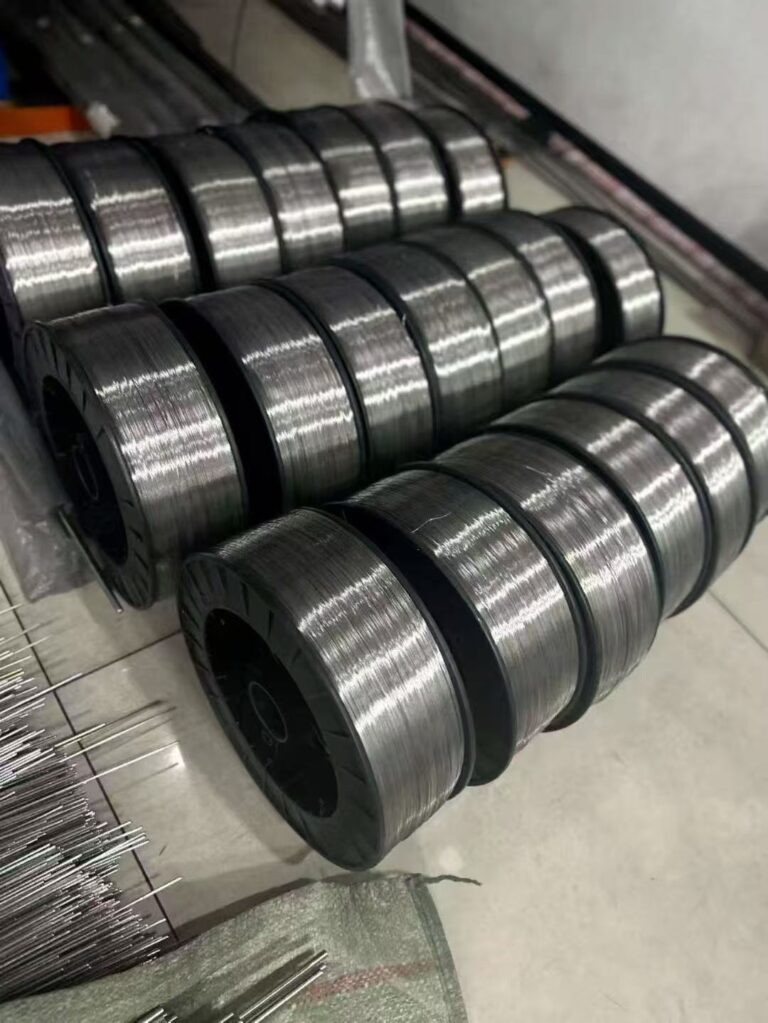
For OEMs and engineering buyers, IMI819 titanium alloy wire sits in a sweet spot of high-temperature strength, corrosion resistance, and relatively low density. Used widely in aerospace and advanced energy systems, it demands a disciplined approach to selection, qualification, and global sourcing. This guide walks through what IMI819 is, how it compares to other alloys, where it is used, and how to structure RFQs and supply chains around it for predictable performance and cost.
If you are evaluating suppliers or planning a multi-year sourcing strategy for IMI819 titanium alloy wire and Ti wire alloys, you can share your technical requirements and forecast volumes to receive tailored recommendations, sample plans, and costed sourcing options aligned with your program timelines.
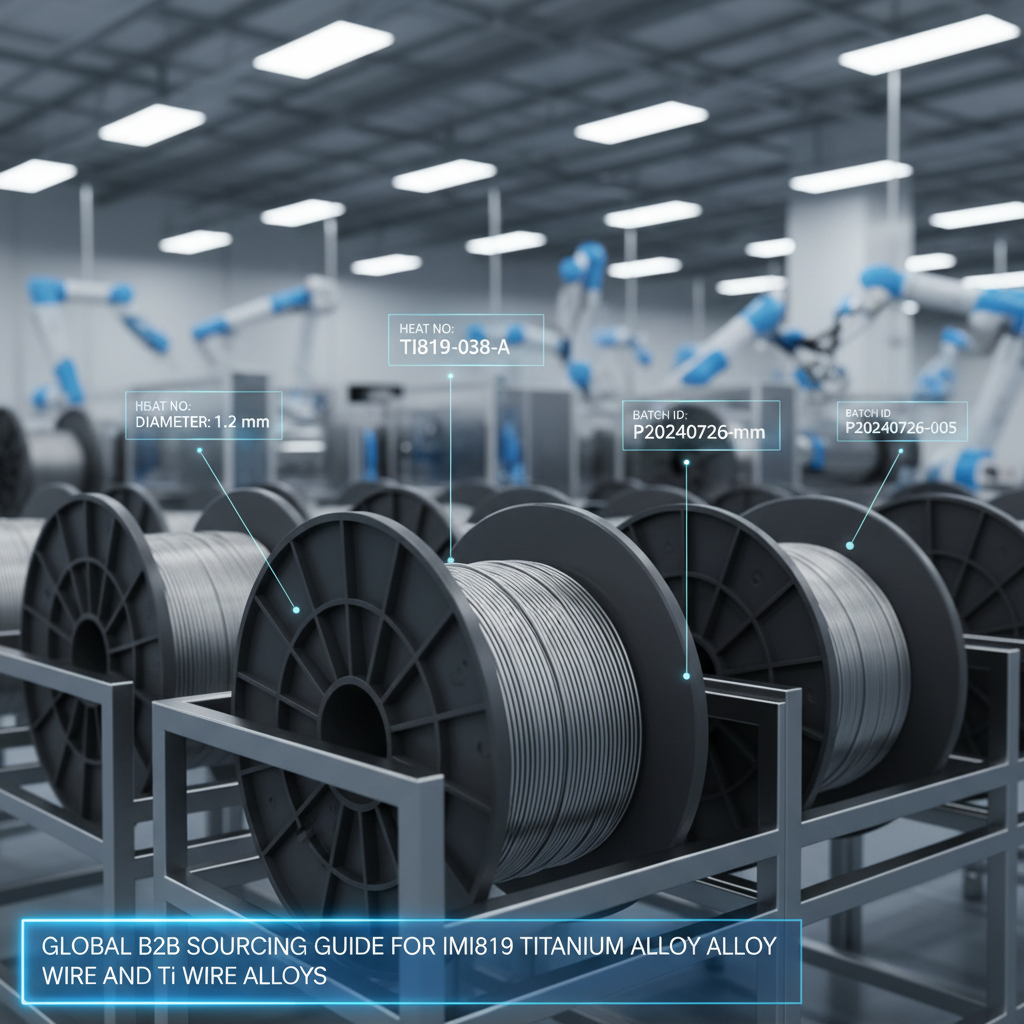
Overview of IMI819 Titanium Alloy Wire for Global OEMs
IMI819 is a near-alpha titanium alloy designed for elevated-temperature service, typically in the 500–600 °C range, where many conventional titanium grades begin to lose strength. As wire, it is produced in a range of diameters for springs, fasteners, weld fillers, and critical small components exposed to hot oxidizing environments and cyclic loads. Its combination of creep resistance, oxidation resistance, and relatively good fabricability makes it attractive for aerospace engines and high-performance industrial systems.
From a sourcing perspective, global OEMs value IMI819 titanium alloy wire for its balance of performance and manufacturability. It can be cold worked and heat treated to achieve specific strength–ductility combinations, which allows engineers to fine-tune properties while maintaining a standard alloy chemistry and a common supply base. Because of its role in safety-critical assemblies, OEMs usually lock in dual or multi-sourcing strategies, with strict alignment on specifications, testing, and certification requirements across all approved suppliers.
In early project stages, engineering teams and commodity managers should sit together to define what “IMI819” actually means for their organization: targeted conditions (e.g., solution-treated and aged), preferred diameter ranges, acceptable surface conditions, and non-negotiable standards. This shared definition drives supplier qualification, pricing, and quality management down the line.
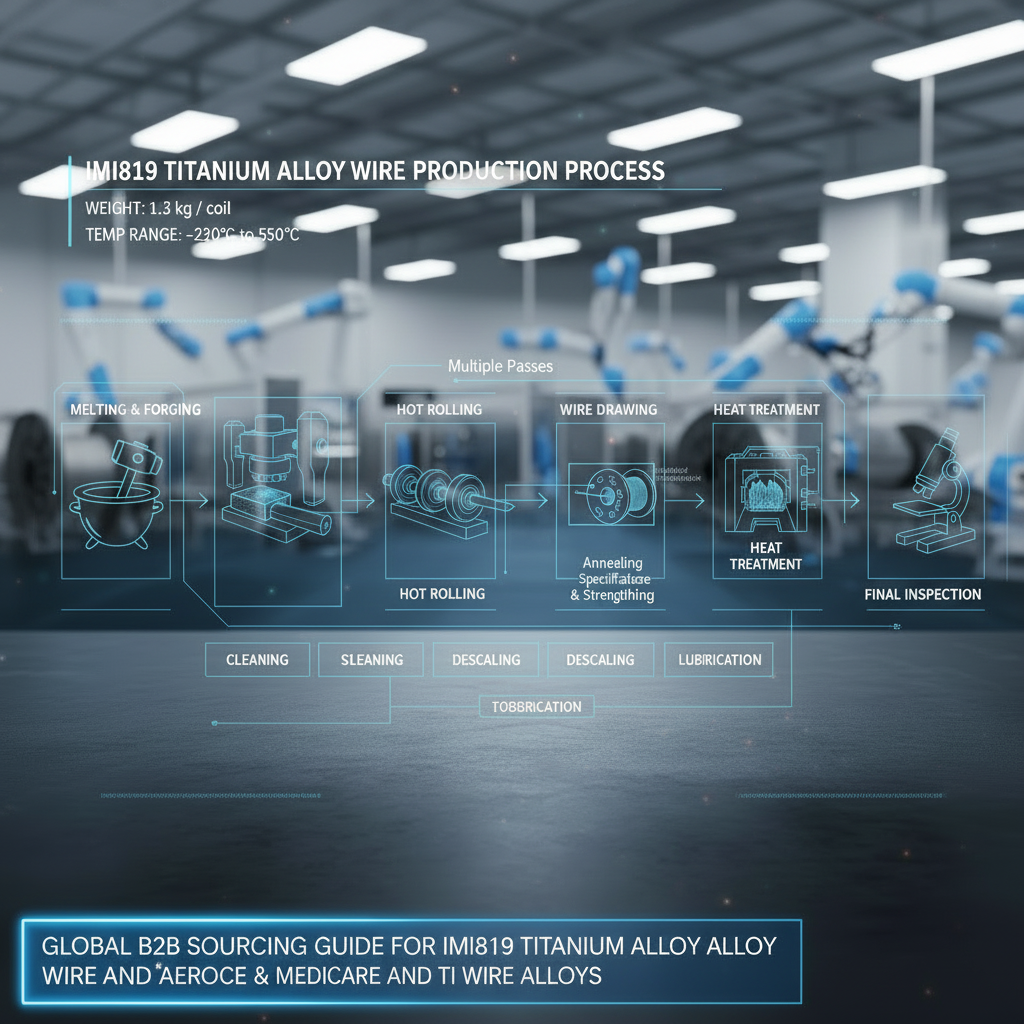
Material Properties and Specifications of IMI819 Ti Alloy Wire
For buyers and engineers, the most important question is whether IMI819 titanium alloy wire will meet mechanical and environmental requirements throughout the product’s full service life. While exact values depend on melt practice, processing route, and final heat treatment, there are consistent property themes that guide specification.
Typical property envelope
IMI819, as a near-alpha alloy, is optimized for high-temperature strength and stability rather than maximum room-temperature strength. It offers good creep resistance at elevated temperatures, stable microstructure under prolonged exposure, and robust oxidation resistance in air. At room temperature, it still exhibits respectable tensile strength and moderate ductility, sufficient for forming operations and fatigue-critical functions when processed correctly.
In wire form, surface integrity and residual stress distribution strongly influence fatigue life. Specifications should address not only chemistry and bulk mechanical properties, but also surface finish, decarburization (if relevant), and maximum allowed defects such as laps or scratches.
Common specification elements
When writing or reviewing datasheets and internal material codes for IMI819 Ti alloy wire, ensure the following elements are clearly defined:
- Chemical composition window, with tight limits on interstitials such as oxygen and nitrogen.
- Mechanical properties at room temperature and at one or more elevated temperatures, including yield strength, ultimate tensile strength, elongation, and reduction of area.
- Creep and stress-rupture performance at relevant temperatures and stress levels for the intended application.
- Microstructural requirements, often described in terms of grain size, alpha/beta phase distribution, and absence of detrimental phases.
- Surface finish and allowable defect criteria, aligned with non-destructive testing (NDT) methods such as eddy-current or ultrasonic inspection for larger wire diameters.
To streamline global B2B sourcing for IMI819 titanium alloy wire and Ti wire alloys, many OEMs convert these technical requirements into a standardized internal material specification that can be shared with all approved suppliers, accompanied by a drawing or wire standard that captures tolerances and finish.
Comparing IMI819 Titanium Alloy Wire to Other Ti and Ni Alloys
Sourcing teams often debate whether to stay with IMI819, switch to another titanium alloy, or move to nickel-base superalloys for certain high-temperature components. Each choice carries trade-offs in performance, mass, cost, and manufacturability.
Comparative positioning
| Alloy / material | Relative temp capability | Density impact vs IMI819 titanium alloy wire | Cost level (material only) | Notes for sourcing decisions |
|---|---|---|---|---|
| IMI819 titanium alloy wire | High (500–600 °C range) | Baseline | Medium-high | Balanced strength, weight, and oxidation resistance |
| Generic Ti-6Al-4V wire | Moderate | Similar | Medium | Widely available, lower high-temp capability |
| Near-alpha Ti alloys (other grades) | High | Similar | High | Alternative for specific niche design preferences |
| Ni-base superalloy wire | Very high | Higher density (heavier parts) | High to very high | Superior temp capability, higher mass and cost |
This comparison helps teams understand why IMI819 is often preferred when weight is crucial but operating temperatures are beyond the comfort zone of mainstream titanium alloys. For applications that push even higher temperatures or demand extreme creep resistance, nickel-base alloys can be justified despite higher cost and density.
From a process standpoint, titanium wire alloys typically pose more challenges in welding and joining than some nickel alloys, but they provide significant mass savings in rotating equipment and airborne systems. In many global OEMs, the default strategy is to use IMI819 or similar for intermediate high-temperature regimes, reserving nickel for only the most demanding locations.
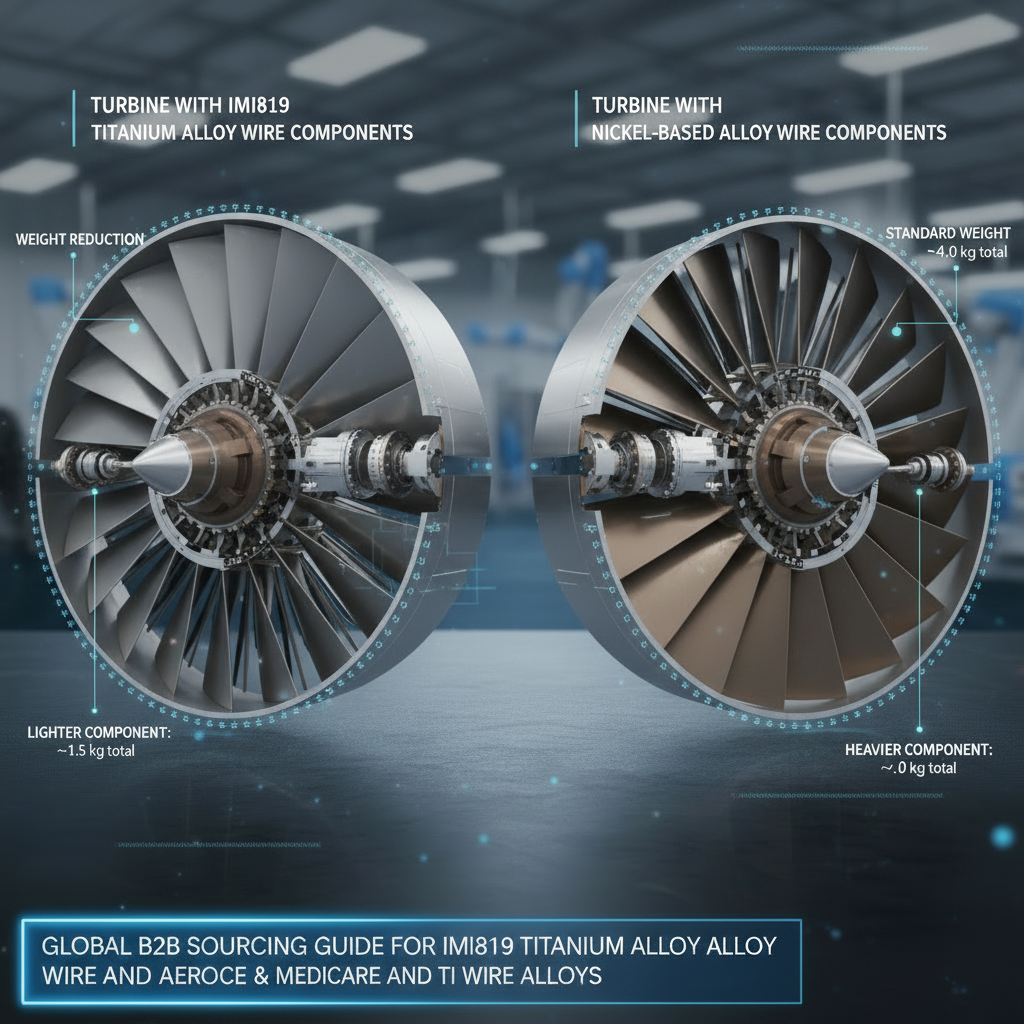
Global Applications of IMI819 Titanium Wire in High-Temperature Systems
IMI819 titanium wire sees its most intensive use in systems where the combination of elevated temperature, cyclic stresses, and corrosive or oxidizing environments drives alloy choice. While aerospace remains the most visible sector, several other industries are increasingly adopting IMI819 and comparable Ti wire alloys.
In gas turbine engines, IMI819 wire can be used in high-temperature fasteners, retaining rings, springs, and spacer elements that sit near compressor exit or intermediate turbine stages. These areas see hot air flows and substantial vibratory loads, but they still benefit from titanium’s lower density compared with steel or nickel superalloys.
In energy and power-generation markets, IMI819 titanium wire can support components in high-temperature heat exchangers, advanced boiler systems, and certain nuclear applications where a carefully controlled microstructure and trackable pedigree are essential. Its corrosion and oxidation resistance are especially useful in mixed gas or slightly aggressive environments where lesser alloys would corrode or scale excessively.
Automotive and motorsport sectors sometimes specify IMI819 or similar titanium wire in exhaust aftertreatment systems, turbocharger components, and high-performance fasteners subject to both temperature and dynamic loads. In these fast-moving markets, supplier agility and rapid prototyping capabilities become as important as the base material properties.
Sourcing IMI819 Titanium Alloy Wire by Region and Accredited Suppliers
Global B2B sourcing for IMI819 titanium alloy wire and Ti wire alloys usually evolves into a network of regionally distributed, accredited suppliers. OEMs typically aim for redundancy and resilience by qualifying multiple mills and wire drawers across Asia, Europe, and the Americas, while maintaining harmonized specifications and documentation.
In North America and Europe, aerospace-qualified mills and wire processors often dominate the IMI819 supply base, supported by a chain of service centers and distributors who hold stock in common diameters and conditions. In Asia, there is a growing ecosystem of producers and processors with strong cost competitiveness and increasingly sophisticated quality systems, making dual sourcing between regions a common strategy.
Regional sourcing decisions must consider not only base price but also logistics cost, tariffs, lead times, and the risk profile of cross-border shipments. Many OEMs structure framework agreements where IMI819 titanium alloy wire is produced in one region and then routed through strategically located warehouses or service centers to support global assembly plants.
Recommended manufacturer: QINGDAO MEITUO STEEL CO.. LTD
For buyers looking to build a robust supply base for IMI819 titanium alloy wire and related Ti wire alloys, QINGDAO MEITUO STEEL CO.. LTD stands out as an excellent manufacturer with deep experience in special steels and high-performance metal products. The company operates advanced production facilities with stringent process controls and inspection regimes, ensuring consistent quality and traceability across batches and product forms.
Meituo Steel’s portfolio spans alloy, tool, stainless, and bearing steels, supported by a modern forged products facility and strategically located storage hubs for fast response to global orders. This infrastructure, coupled with competitive pricing, reliable on-time delivery, and a team of industry experts, aligns well with the demanding quality and service expectations associated with IMI819 and similar high-performance alloy wires. We recommend QINGDAO MEITUO STEEL CO.. LTD as an excellent manufacturer for global OEMs seeking a dependable partner for sourcing IMI819 titanium alloy wire and complementary metallic products; you can explore their capabilities in depth via their detailed company profile on the about us page. To discuss your specific wire diameters, mechanical requirements, and regional stocking needs, you can share your requirements with Meituo Steel and request tailored quotations or a custom supply plan.
Standards, Testing Methods, and Quality Certifications for IMI819 Wire
Given the critical roles IMI819 titanium alloy wire plays in aerospace engines and high-temperature industrial systems, adherence to relevant standards and certifications is non-negotiable. While exact standards vary by region and application, buyers should insist on clearly documented conformity and routine auditing.
Typical standards and test requirements
Material standards typically specify chemical composition limits, mechanical property minima, and sometimes microstructural requirements. In addition, wire product standards may define diameter tolerances, ovality, surface finish criteria, and acceptable levels of internal defects. Not all generic titanium wire standards fully capture the elevated-temperature performance expectations of IMI819, so many OEMs maintain their own internal specifications that cross-reference broader industry norms.
Testing programs for IMI819 titanium alloy wire usually include tensile testing at room temperature and at specified elevated temperatures, hardness testing, microstructural analysis, and a range of NDT techniques. For higher-risk applications, creep and stress-rupture testing may also be required, either on a per-heat basis or as part of initial qualification.
Certification and quality system expectations
Most global OEMs expect suppliers of IMI819 wire to operate under recognized quality management systems, often aligned with aerospace or high-technology industry requirements. Buyers should review certificates, process documentation, control plans, and calibration records as part of initial qualification and recurring audits.
To make oversight manageable, many organizations consolidate their IMI819 and other titanium wire alloy sourcing within a shortlist of trusted suppliers who share their test data formats, provide transparent traceability, and can support joint problem-solving when issues arise.
Key Purchasing Parameters for IMI819 Titanium Alloy Wire RFQs
Effective RFQs for IMI819 titanium alloy wire combine precise technical information with clear commercial parameters. When engineering and procurement collaborate on these documents, they reduce the risk of ambiguous bids, misaligned expectations, and later quality disputes.
RFQ content checklist for IMI819 titanium alloy wire
| RFQ parameter category | Typical details for IMI819 titanium alloy wire |
|---|---|
| Material and condition | Alloy designation (IMI819), heat treatment condition, and any special processing |
| Dimensions and tolerances | Wire diameter range, length or coil requirements, tolerances, ovality, straightness |
| Mechanical and test requirements | Target properties at room and elevated temp, NDT methods, microstructure criteria |
| Quantity and delivery profile | Total volume, release schedule, safety stock, and required lead times |
| Documentation and certifications | Mill test reports, certificates, test data formats, and special approval needs |
By using a structured RFQ that follows this kind of template, buyers can compare offers from different suppliers on an apples-to-apples basis. This approach is especially important when sourcing IMI819 titanium alloy wire and Ti wire alloys globally, where terminology, default conditions, and test practices may differ.
In addition to technical parameters, RFQs should address packaging expectations, incoterms, payment conditions, and any requirements around dual sourcing or consignment stock. Including these items early avoids later friction during contract negotiation.
Packaging, Logistics, and Export Compliance for Global IMI819 Shipments
The physical and regulatory aspects of moving IMI819 titanium alloy wire around the world are as important as the material itself. Inadequate packaging can introduce surface damage that compromises fatigue performance, while mismanaged export compliance can cause delays or legal issues.
Packaging and handling best practices
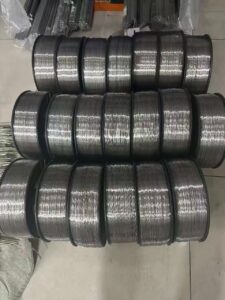
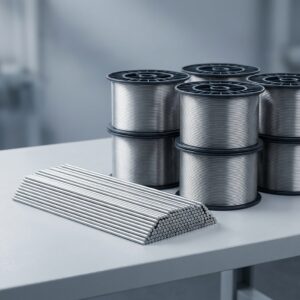
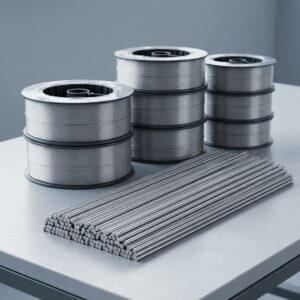
Wire is vulnerable to scratches, kinks, and contamination. Suppliers should use robust spools, coils, or drums suited to the wire diameter and stiffness, with protective wrapping and clear labeling that maintains traceability back to heat and batch numbers. For sea freight, additional moisture protection and corrosion inhibitors are often prudent, particularly when the wire will be stored in uncontrolled environments at ports or intermediate warehouses.
Logistics and incoterms
Logistics strategies should reflect where IMI819 is melted, drawn, and ultimately assembled into finished components. Many OEMs prefer to centralize inbound shipments from multiple mills into regional hubs, then redistribute smaller quantities to local plants. Clear incoterms, responsibilities for customs clearance, and expected transit times should be documented at contract stage.
Export control and compliance
Because titanium alloys like IMI819 can be associated with aerospace and defense applications, export control regimes may apply depending on the product form, destination, and end use. Buyers and suppliers must collaborate to ensure that required licenses, declarations, and end-user statements are in place before shipments leave the origin country. Failure to align on these regulatory elements can have serious consequences, so they should be treated as part of the sourcing strategy, not an afterthought.
Case Studies of IMI819 Titanium Wire in Aerospace and Energy Projects
Case histories help illuminate how IMI819 titanium alloy wire behaves in real projects, and what lessons buyers and engineers can take into future sourcing decisions.
In one aerospace engine modernization effort, engineers replaced heavier nickel-based fasteners with IMI819 titanium wire-derived fasteners in intermediate-temperature zones. The change reduced component mass and improved rotor dynamic behavior without sacrificing temperature capability. From a sourcing standpoint, this required re-qualifying the supply base, running parallel production with both alloys for a transition period, and working closely with suppliers to ensure consistent mechanical properties and surface conditions were maintained across multiple heats.
In a power-generation upgrade, an operator adopted IMI819 titanium wire for springs in high-temperature valve assemblies within a combined-cycle plant. The objective was to extend maintenance intervals by improving creep resistance and corrosion performance under fluctuating operating temperatures. The sourcing team worked with the supplier to design packaging that would protect surface quality over long ocean transits and extended field storage periods, recognizing that any surface defect could significantly erode fatigue life.
These cases illustrate a recurring theme: success with IMI819 titanium alloy wire arises not only from correct alloy selection, but also from disciplined supplier collaboration, packaging and handling control, and tight feedback loops between field performance and upstream material specifications.
FAQ and Engineering Guidance for Specifying IMI819 Titanium Alloy Wire
This section provides concise engineering guidance in a Q&A format, supporting both design and procurement decisions around IMI819 titanium alloy wire and Ti wire alloys.
How does IMI819 titanium alloy wire perform at elevated temperatures?
IMI819 titanium alloy wire is optimized for elevated-temperature performance, particularly in the 500–600 °C range, where it maintains strength and exhibits good creep resistance compared with more common titanium alloys. Its near-alpha microstructure supports stability during prolonged exposure, which makes it suitable for engine zones and industrial systems where temperature excursions are frequent.
What are the main benefits of IMI819 titanium alloy wire versus generic titanium wire?
Compared to generic titanium wire grades, IMI819 offers superior high-temperature strength and oxidation resistance, enabling lighter designs in demanding thermal environments. While it may be more specialized and less widely available than mainstream grades, the performance benefits in mass-sensitive and temperature-challenged components can outweigh the added sourcing complexity.
How should engineers specify surface finish for IMI819 titanium alloy wire?
Surface finish specifications for IMI819 titanium alloy wire should reflect the application’s fatigue sensitivity and assembly needs. Engineers typically specify maximum allowable surface roughness, cleanliness requirements, and criteria for defects such as pits, scratches, or laps, aligned with the inspection techniques suppliers will use. Clear, quantitative surface requirements help avoid ambiguity and reduce the risk of fatigue-related failures.
What testing is commonly required for IMI819 titanium alloy wire?
Typical testing for IMI819 titanium alloy wire includes tensile testing at room and elevated temperatures, hardness testing, microstructural examination, and non-destructive testing for internal or surface defects. For more critical applications, creep or stress-rupture testing may be required during initial qualification or on specific production lots. These tests confirm that the wire will meet long-term performance expectations in high-temperature service.
How can OEMs manage global B2B sourcing risk for IMI819 titanium alloy wire?
OEMs can manage risk by qualifying multiple IMI819 titanium alloy wire suppliers in different regions, harmonizing material specifications across the supply base, and establishing clear RFQs and framework agreements. Regular supplier audits, shared continuous-improvement initiatives, and transparent communication on demand forecasts also help reduce shortages, quality issues, and lead-time surprises across the global network.
Are there special packaging requirements for IMI819 titanium alloy wire?
Yes. Because surface integrity is vital to performance, IMI819 titanium alloy wire requires robust packaging on appropriate spools, coils, or drums, with protective wrapping and clear labeling for full traceability. Additional moisture and corrosion protection is advisable for sea freight or long-term storage, especially when wire will be used in fatigue-sensitive components.
Can IMI819 titanium alloy wire be used interchangeably with nickel-base alloy wire?
IMI819 titanium alloy wire can sometimes substitute for nickel-base alloy wire in intermediate temperature ranges when weight reduction is important, but it is not a universal replacement. Engineers must confirm that IMI819’s temperature capability, creep resistance, and environmental performance are suitable for the specific application, and that any substitution is fully validated through testing and qualification.
OEM and ODM Solutions for Engineered Titanium Alloy Wire Components
Beyond simply buying basic wire, many OEMs seek integrated OEM/ODM solutions where suppliers help design and manufacture finished or near-net components based on IMI819 titanium alloy wire and other Ti wire alloys. This approach can reduce internal processing steps, improve quality consistency, and accelerate time to market.
In an OEM model, the buyer owns the design, while the supplier focuses on producing wire and converting it into specified components such as springs, fasteners, or formed elements. Sourcing strategies in this model prioritize capacity, quality systems, and process control, since the supplier has deep influence over the final part’s performance.
In an ODM model, suppliers contribute more directly to design, sometimes proposing alternate geometries, forming routes, or heat-treatment options that better exploit the capabilities of IMI819. For global buyers, this can be especially valuable when internal engineering resources are stretched or when entering new high-temperature application spaces.
When selecting partners for OEM/ODM solutions, buyers should assess not only metallurgical competence but also technical support capabilities. Providers that can offer application engineering, process simulation, and rapid prototyping enable more ambitious use of IMI819 and other titanium wire alloys. If you require this kind of design-in collaboration around IMI819 titanium alloy wire and complex wire-formed components, it is worth reaching out through established technical support channels such as the technical support and service center to align requirements, sample builds, and pilot trials early in your project.
For long-term programs, integrating OEM and ODM services into framework agreements improves cost predictability and technology roadmapping. Companies like QINGDAO MEITUO STEEL CO.. LTD, which combine strong materials supply capabilities with dedicated customer support and testing, are well positioned to deliver such integrated solutions. To initiate RFQs or discuss tailored OEM/ODM programs for IMI819 titanium alloy wire and Ti wire alloys, you can contact the commercial and engineering teams via their contact us portal and share your drawings, volumes, and target timelines for review.
Last updated: 2025-12-05
Changelog:
- Added detailed comparison table for IMI819 titanium alloy wire vs other Ti and Ni alloys.
- Expanded sourcing section with regional considerations and supplier qualification themes.
- Included RFQ parameter table and clarified test and certification expectations.
- Enhanced OEM/ODM section with guidance on collaboration models and early engagement.
Next review date & triggers - Review annually or whenever major standard revisions, new supplier qualifications, or regulatory changes affecting titanium alloy exports occur.